

Why Shay Mitchell’s ‘Controversial’ Kids Skincare Brand Is Genius.
Everyone’s calling Shay Mitchell’s kids skincare brand dystopian. Here’s why it’s actually genius.

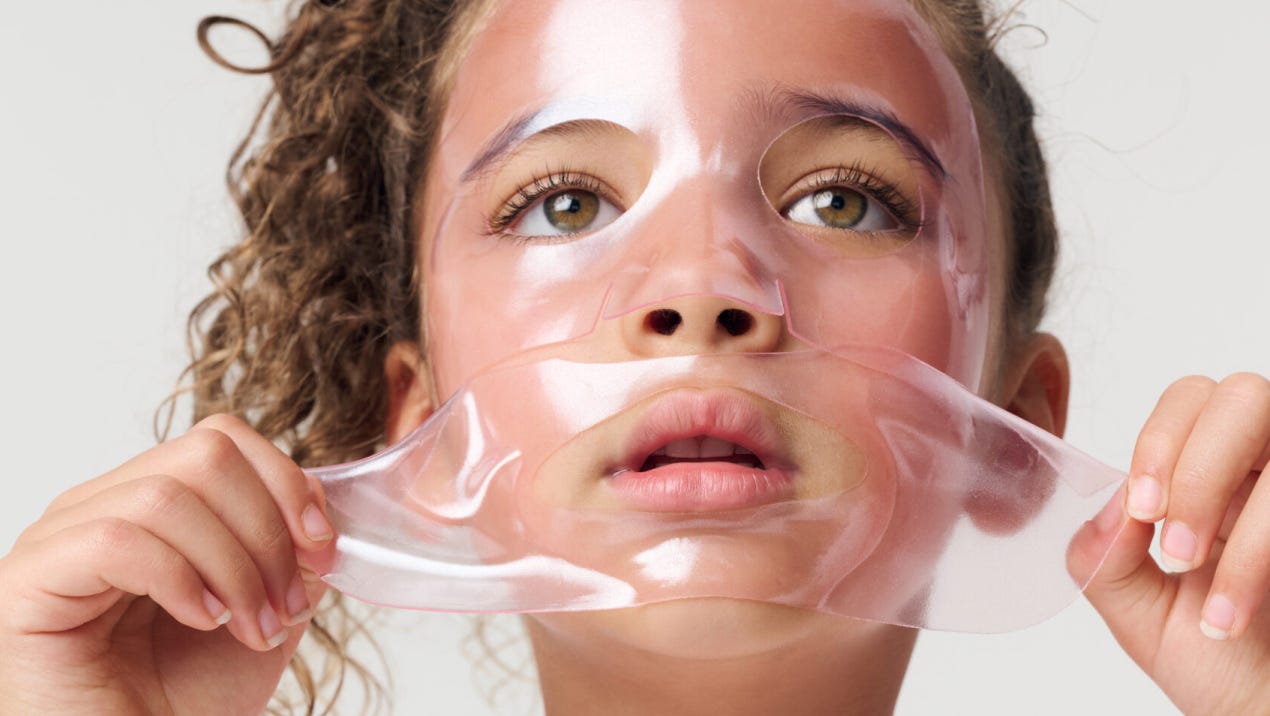
Shay Mitchell just launched Rini, a skincare brand for children as young as three.
The internet is losing its mind. Reddit threads are calling it “dystopian.” Parents are furious. Social media is exploding with outrage. Critics are accusing her of pushing beauty standards on toddlers and exploiting childhood insecurity for profit.
But what nobody’s saying is that this is why it works, and that her concept is brilliant.
Shay Mitchell didn’t accidentally stumble into controversy. She redefined the travel category with Beis and is now coming for one of the most lucrative businesses in the world, the beauty industry.
Mitchell is designing this brand to be polarizing because, by leaning into controversy, she generates WAY more earned media coverage. Effectively, free press by pissing off the people who would never be customers in the first place.
The polarization strategy is what brands like Skims are going hardcore on, as it costs fundamentally less to reach more people and drive more sales by being controversial.
Why Rini Taps into a Blue Ocean Strategy
So let’s chat about why Rini is a brilliant business model. The beauty industry has a problem nobody wants to acknowledge. The 8-to-12-year-old demographic has become a massive segment of beauty consumers, and nobody is serving them properly.
Walk into any Sephora and you’ll see ten-year-olds shopping for Drunk Elephant serums with retinol designed for aging skin. Tweens are comparing Summer Fridays products formulated for millennials dealing with fine lines and kids filming YouTube haul videos featuring Glow Recipe skincare with active ingredients their skin doesn’t need.
YouTube for kids has created a massive consumer base for children, and the products they are using are the same as those used by adults. Parents are being pressured by their kids to buy these products and are succumbing to the pressure because “everyone else at school has them”. It doesn’t matter what you think as a parent. This customer segment exists, and they are spending alot of money. The gap is that every single option currently available to this demographic was designed for adult skin concerns. This puts parents in an impossible position. Say no entirely, and the kid feels excluded from conversations at school. Say yes and buy the $68 Drunk Elephant serum, knowing they’re letting their 10-year-old use formulations designed for skin concerns she doesn’t have.
Rini identified the Blue Ocean. A massive, growing segment of children already obsessed with beauty who don’t need harsh actives but currently have zero age-appropriate options. The demand exists. The behaviour exists and nobody was serving it, that is the textbook definition of a Blue Ocean Strategy (a great business book by W. Chan Kim).
The SKIMS Strategy: Going Viral On Purpose
Understanding the blue ocean is only half the equation. The other half is getting attention in a market so saturated that breaking through organically is nearly impossible without massive advertising budgets.
This is where Shay Mitchell deployed the SKIMS playbook with precision. By using models as young as 3, the internet blew up. Instantly, Rini was being stitched, criticized, and ripped apart by moms, kids groups, and more —the same audience that is the EXACT demographic for this product. By skewing young and creating outrage, Rini was able to reach its customers and allow potential customers to decide whether it’s a better alternative to the products they already buy for their children. The secret was having young models, as kids as young as three aren’t really asking for beauty products en masse. BUT by going young, the products reached mom groups spanning from children to the 8-12-year-old range. The result is millions of impressions across platforms that reach the target for nominal dollars spent.
Business owners, this is why calculated controversy is brilliant and why you have to lean into it before it becomes overdone.
The Takeaway: What Your Brand Can Learn
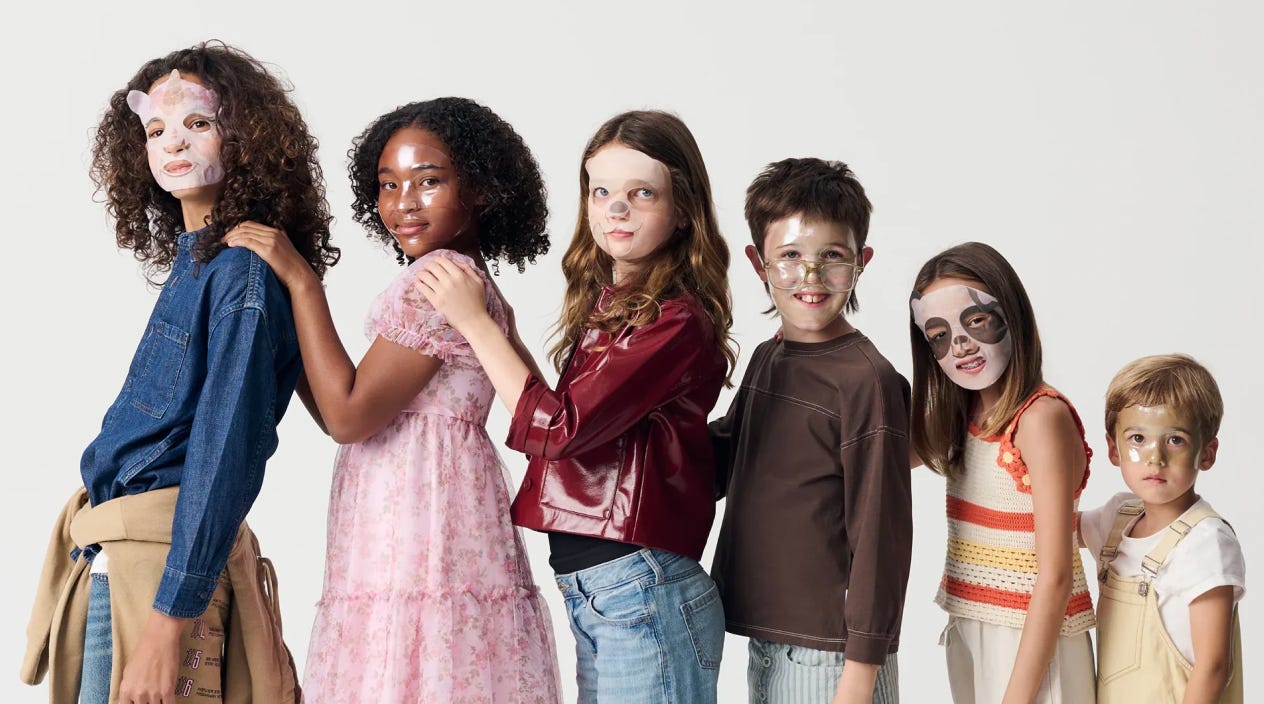
The Rini launch demonstrates something critical about brand building in 2025: playing it safe is expensive and gets you nowhere. Rini provides a better alternative to a demand that existed without it, and Shay will be laughing her way to the bank as people who aren’t her customers is doing her marketing for her.
In the current landscape, paid advertising costs are rising while effectiveness is declining. Breaking through organically requires either years of consistent content or massive budgets. Calculated controversy offers a third path, but only if you understand how to deploy it strategically.
Here are the core takeaways you can learn from Rini’s approach, so that you can deploy the strategy effectively for your business:
Find the blue ocean first. Rini works because the market gap already existed. 8-12-year-olds are already using beauty products. Parents are struggling with what to offer them. If Rini had tried to create controversy around a market need that didn’t exist, the strategy would have failed. The controversy is the distribution mechanism, not the value proposition. In order to make controversy work for you, you have to have an informed value proposition as a starting point.
Controversy must cast a wide net to reach your narrow target. The “as young as three” positioning wasn’t designed to convert three-year-old parents. It was designed to spread the conversation wide enough that it reached parents of 8-12-year-olds who exist in the same communities. Your controversy needs to be broad enough to generate real debate, but the actual product needs to serve a specific, real market need.
Undergo a Mindset Shift: The people who hate you are marketing for you. The headlines and stitched videos of outraged parents calling Rini dystopian are generating more reach than any influencer partnership could achieve. You don’t need everyone to agree with you. You need the disagreement to be loud enough to put you in front of the people who need what you’re offering.
Polarize around positioning, not credibility. The “as young as three” positioning is controversial in a way that generates debate, but doesn’t destroy the core value proposition. Parents can disagree with marketing to toddlers while still recognizing that age-appropriate skincare for tweens makes sense. If the controversy had been about product safety or misleading claims, that would have destroyed credibility and made conversion impossible.
In summary, safe doesn’t break through anymore. The algorithm favours polarization. Calculated controversy can be a distribution strategy if you understand your market deeply enough to know where the debate will spread and whether it will reach your actual customers.
Just make sure you’re polarizing around real market demand, not manufactured problems. Make sure the controversy serves distribution without destroying credibility. That’s the difference between controversy that builds a brand and controversy that destroys it.
See you tomorrow!
Xx Camille
As always, I love helping small businesses win, whether that’s through my self-paced Social Media Masterclass here or through a 1:1, Direct discovery or working with my agency.